Explore the Little Woods Curriculum
At Little Woods, learning is designed around play, meaningful relationships, children’s interests, exploration and connection with the natural world. Experiences support communication, wellbeing, confidence, creativity, problem-solving and a strong sense of belonging.
How our curriculum works
Our program is guided by the Early Years Learning Framework and shaped every day by children’s interests, questions and developing abilities. Educators observe, plan and reflect together so learning grows with each child.
Experiences are introduced through small-group invitations, thoughtful provocations and prepared environments. Children then explore independently, revisit materials with confidence and make connections between what they know and what they are discovering.
Educators stand back and observe, documenting learning and stepping in gently when a child benefits from a next challenge, a shared strategy or a moment of encouragement.
New experiences are offered as children are ready to extend their thinking, building deeper understanding through repetition, meaningful play and strong relationships.


Key curriculum areas
- Identity & Belonging: Warm relationships, confidence, social skills and a strong sense of self.
- Communication & Language: Storytelling, conversation, early literacy and expressive language.
- Wellbeing & Movement: Active play, self-care, rest and healthy routines.
- Creativity & Expression: Art, music, construction and dramatic play in many forms.
- Nature & Discovery: Outdoor exploration, sustainability and early scientific thinking.
The five areas of our curriculum
Each area draws on children’s natural curiosity and grows with them from birth to school.
Identity & Belonging
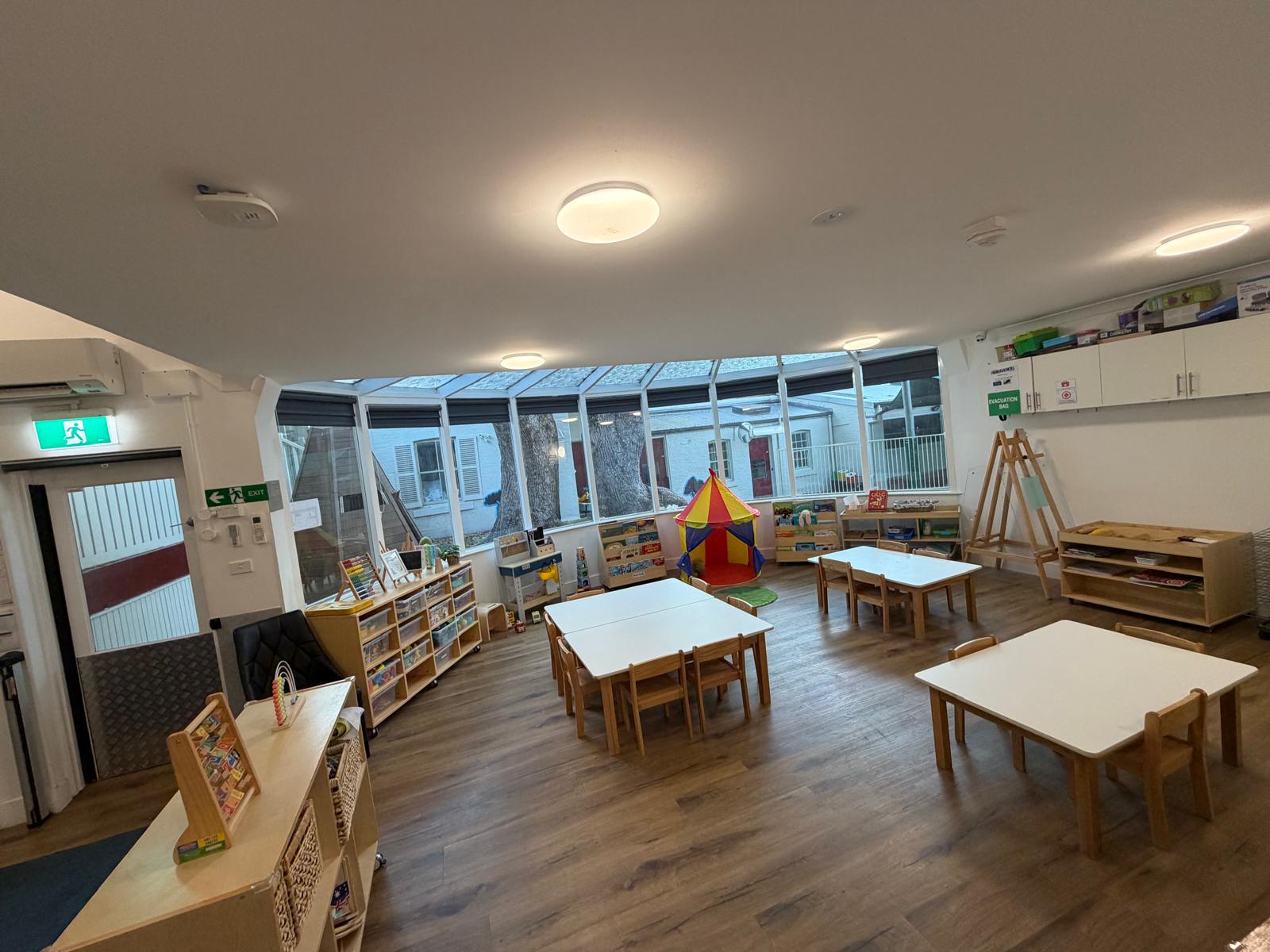
Children develop a strong sense of self through warm, respectful relationships with educators and peers. Small group sizes, consistent routines and unhurried transitions help each child feel known, safe and confident to participate.
Example materials and activities
- Family photo displays and personal cubbies
- Group rituals and morning welcomes
- Grace, courtesy and gentle problem-solving
- Cultural celebrations shared with families

Communication & Language
Language is nurtured through storytelling, songs, conversation and rich early literacy experiences. Educators model expressive language and encourage children to share ideas, listen to others and represent thinking in many ways.
Example materials and activities
- Read-aloud and book corners
- Rhymes, songs and music circles
- Mark-making, drawing and early writing
- Small-group conversations and questions
Wellbeing & Movement
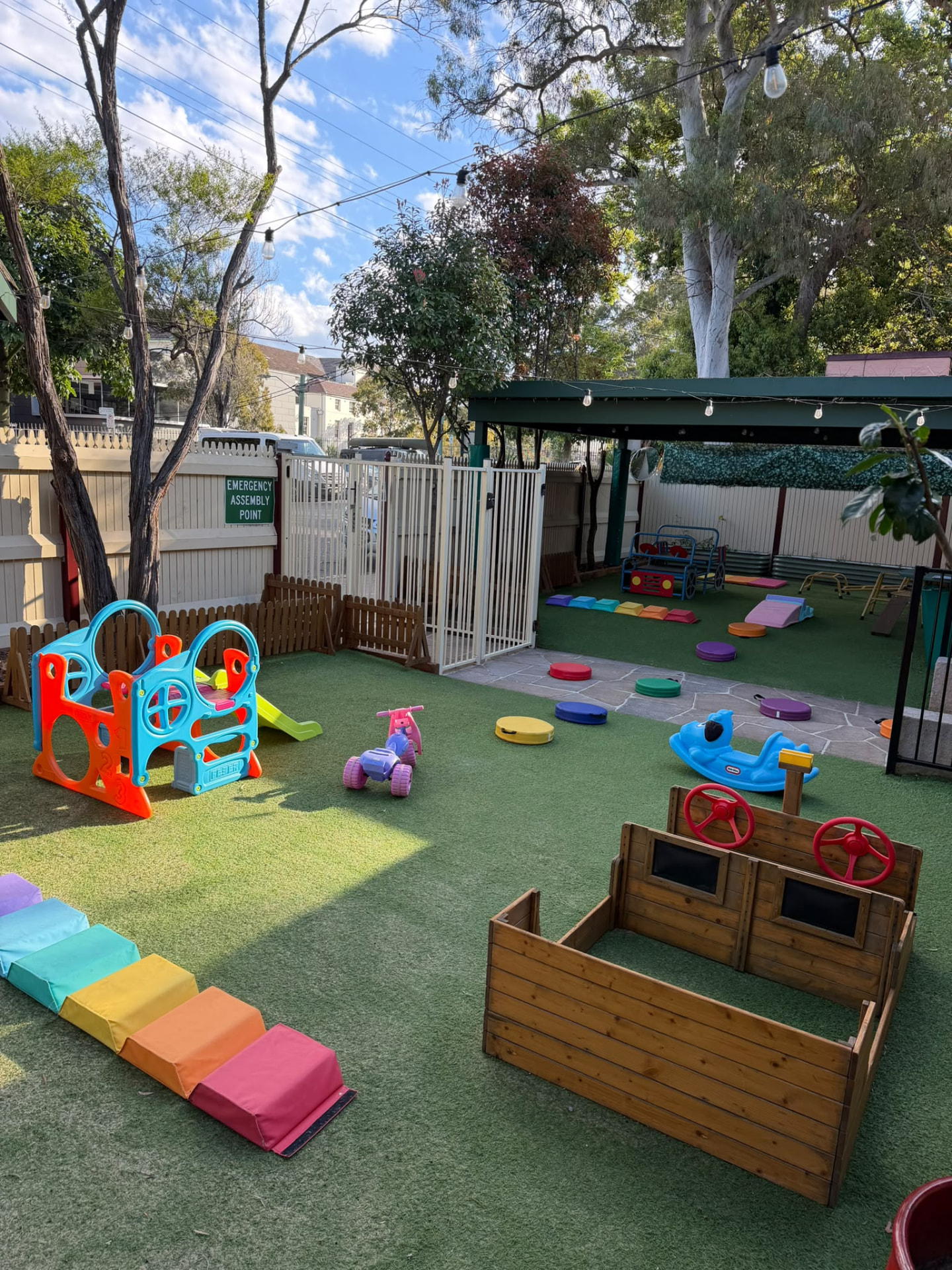
Children build coordination, strength and self-regulation through active play, rest and healthy routines. Balanced days include outdoor exploration, quiet moments and time to develop independence in self-care.
Example materials and activities
- Outdoor climbing, balancing and running
- Fine motor trays and hand strengthening
- Mindful moments, yoga and rest
- Independent hand-washing and dressing

Creativity & Expression
Children have many languages, including visual art, music, dance, construction and dramatic play. Open-ended materials invite experimentation, help children represent their thinking and celebrate individual expression.
Example materials and activities
- Painting, clay and collage studios
- Loose parts and construction play
- Dramatic play corners and dress-ups
- Music, movement and instrument exploration
Nature & Discovery
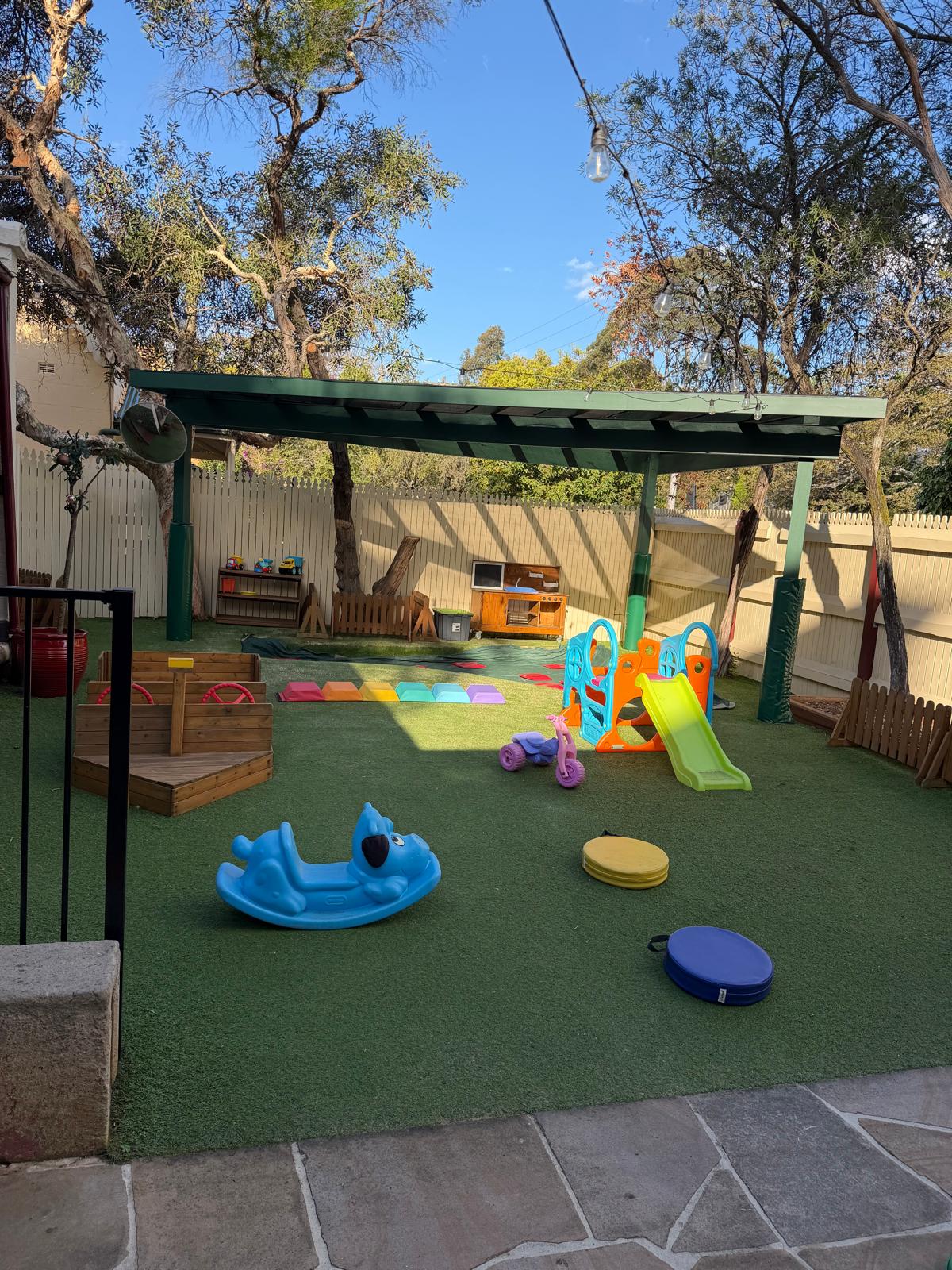
The natural world is our most inspiring classroom. Children investigate plants, weather, insects and materials, developing curiosity, care for the environment and early scientific thinking through hands-on inquiry.
Example materials and activities
- Garden beds, herbs and sensory plants
- Nature collections and investigation trays
- Weather, water and light exploration
- Sustainability and gentle care for living things
See our curriculum in action
Visit Little Woods to experience our learning environments and meet the team.