Ten-minute play ideas for babies and toddlers, using what you have
By Little Woods Early Learning5 min read
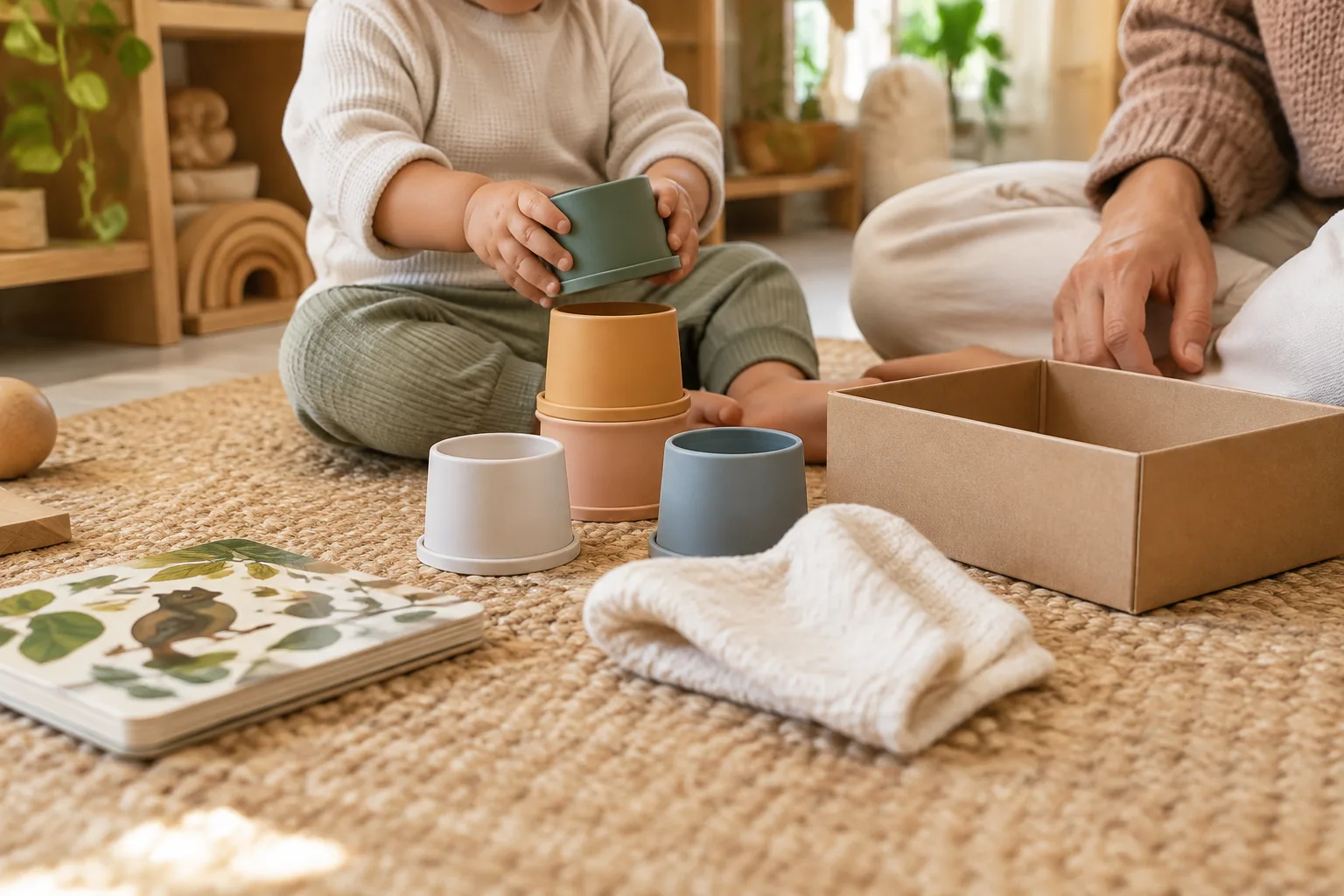
Small moments of play are enough
You do not need a cupboard full of toys or a carefully planned activity to enjoy playing with your child. A sturdy board book, a clean cloth, large stacking cups or a cardboard box can offer plenty to explore together.
Think of these ten-minute ideas as invitations, not tasks to complete. Your baby might look at a picture for a moment, then turn towards your voice. Your toddler might ignore your stacking idea and spend the whole time putting cups into a box. Both are reasons to follow their lead.
Ten minutes is a handy pocket of time, not a goal. A few relaxed minutes count, and it is fine to stop sooner.
Before you begin: keep it simple and safe
Choose a clear floor space away from stairs, cords, hot drinks and furniture that could tip. Stay close and actively supervise throughout, especially when your child is mouthing objects.
Check each item before offering it:
- Board books: Choose sturdy books without loose bindings, torn pieces or detachable decorations.
- Cloths: Use small, clean washcloths without loose threads, loops, ribbons or buttons. Keep faces and necks uncovered.
- Stacking cups: Choose large, age-appropriate cups without cracks, sharp edges or small detachable parts. Do not substitute bottle caps or other small containers.
- Cardboard boxes: Remove staples, loose tape, plastic packaging and packing materials. Avoid boxes that held chemicals or have sharp or damaged edges.
Avoid anything small enough to fit fully inside your child’s mouth. Supervision does not make small parts safe. Put materials away after play, and keep loose cloths and boxes out of your baby’s sleep space.
1. Explore a board book together
Set out one or two books and let your child choose where to begin. You do not have to read every word or finish the story.
For a baby
Hold your baby comfortably or sit beside them on a clear floor mat. Position the book where they can easily see it. Point to one picture and use a few simple words: “A dog. Woof, woof!”
Pause to notice their response. They might look, reach, kick or make a sound. Respond as though you are having a conversation, without expecting a particular reaction.
For a toddler
Invite them to choose the book and turn the pages. Follow whatever catches their attention, even if that means returning to the same picture several times.
Instead of asking lots of questions, try commenting: “That truck has big wheels.” Leave room for them to point, speak or add a sound. If they want to find something, you could suggest, “Let’s look for the cat.”
Follow their interest: If your child closes the book and opens another, go with it. Exploring how books work can be part of the play.
2. Play a simple cloth hiding game
A clean washcloth and a large stacking cup are enough for a little hiding and revealing.
For a baby
Sit close and offer the cloth for your baby to touch while you watch. You can gently scrunch it in your hand or move it slowly beside a cup.
For a baby who is reaching for objects, partly cover the cup, leaving plenty visible. Lift the cloth and say, “There it is!” Give them time to reach if they want to. Keep the cloth away from their face and remove it if they begin pushing it into their mouth.
For a toddler
Hide the cup under the cloth and invite them to find it. Then swap roles so they can do the hiding.
They might prefer wiping the cup, cleaning the floor or tucking a sturdy toy into an imaginary bed. That is a useful cue to change direction rather than repeat the hiding game.
Follow their interest: Try “You’re wiping the cup” instead of explaining what they are supposed to do.
3. Stack, nest and knock down cups
Start with two or three large stacking cups. A small selection keeps the invitation easy to explore.
For a baby
Place a cup within comfortable reach during awake, supervised floor play. Let your baby look at it, touch it or grasp it, according to what they are already doing comfortably.
You can slowly turn another cup in your hands or gently tap two together. Pause before repeating so your baby has time to respond. There is no need to place them in a sitting position they cannot comfortably maintain.
For a toddler
Build a low tower and invite them to knock it down. Try nesting the cups, turning them upside down or lining them up.
Use everyday language as you play: “This one fits inside” or “You put another on top.” Counting is optional. There is no need to turn the activity into a lesson.
Follow their interest: If tipping and dropping are the attraction, provide a clear space and keep towers low, away from faces.
4. Turn a cardboard box into a discovery space
An open, shallow box can become a container, a pretend garage or simply something to investigate.
For a baby
Place a sturdy shallow box beside your baby during awake floor play. Put one large cup inside and gently tap the box yourself. Your baby may enjoy watching, touching the edge or reaching towards the cup.
Keep your baby on the floor rather than inside the box. If they mouth the cardboard or it becomes soggy or torn, put it away.
For a toddler
Offer an open box with a few large cups or sturdy board books. Your toddler might fill it, empty it or decide it is a bed for a favourite toy.
Choose a shallow box with flaps removed or folded securely out of the way. Keep it on the floor and avoid standing or climbing on it.
Follow their interest: An empty box may be enough. Wait to see what your child does before adding more objects.
Let your child set the pace
Watch for signs that your child wants a pause, such as turning away, pushing materials aside or becoming unsettled. They may need a cuddle, a feed, rest or simply a change of scene.
When something holds their attention, resist the urge to make it harder. Repeating the same action can be the whole activity. You can stay involved by noticing aloud: “In goes the cup. Now it’s out again.”
You do not need to try every idea today. One familiar object and your interested company are a good place to start.
Exploring play beyond home
If you are considering early learning, a visit can help you ask how educators respond to children’s interests and organise play for different ages. You are welcome to Book a Tour at Little Woods Early Learning to explore the spaces and talk through your questions.