When your child plays alone: Understanding different ways of joining in
By Little Woods Early Learning5 min read
Seeing your child play alone while others gather together can stir up questions. Are they happy? Do they want a friend? Should you step in?
A preference for playing alone is not, by itself, a reason to worry. Children take part in social life in different ways, and the same child may seek company in one moment and choose quiet, independent play in the next.
The helpful question is not simply, “Are they playing with someone?” It is, “Do they seem comfortable, connected and able to find support when they need it?”
Playing alone is not always feeling alone
A child carefully arranging animals or digging in a sandpit may be absorbed in something satisfying. They might welcome another child, prefer not to interrupt their idea, or need a quieter moment after a busy morning.
It helps to distinguish between chosen solitude and wanting company but struggling to find a way in. You cannot always tell from a quick glance, so look for patterns and ask the adults who know your child well.
A child who seems relaxed and engaged may need space to continue. A child who repeatedly approaches others, retreats in tears or says nobody will play with them may need more active support.
Neither situation tells you everything about a child's friendships or wellbeing on its own.
Different ways children take part in play
You may hear educators describe watching, parallel play and shared play. These are useful descriptions, not a ladder children must climb on a deadline. Children can move between them depending on the activity, setting, people and how they feel that day.
Watching from the edge
A child might stand near a pretend café, noticing who is serving food and where the cups belong, without touching anything.
Watching can be a way of becoming familiar with a game. It does not necessarily mean the child is disengaged. They may smile, comment or follow the action closely.
Rather than urging, “Go and play!”, you could say, “You're watching them make lunch. Would you like to watch a little longer, or would you like some help joining?”
Playing alongside others
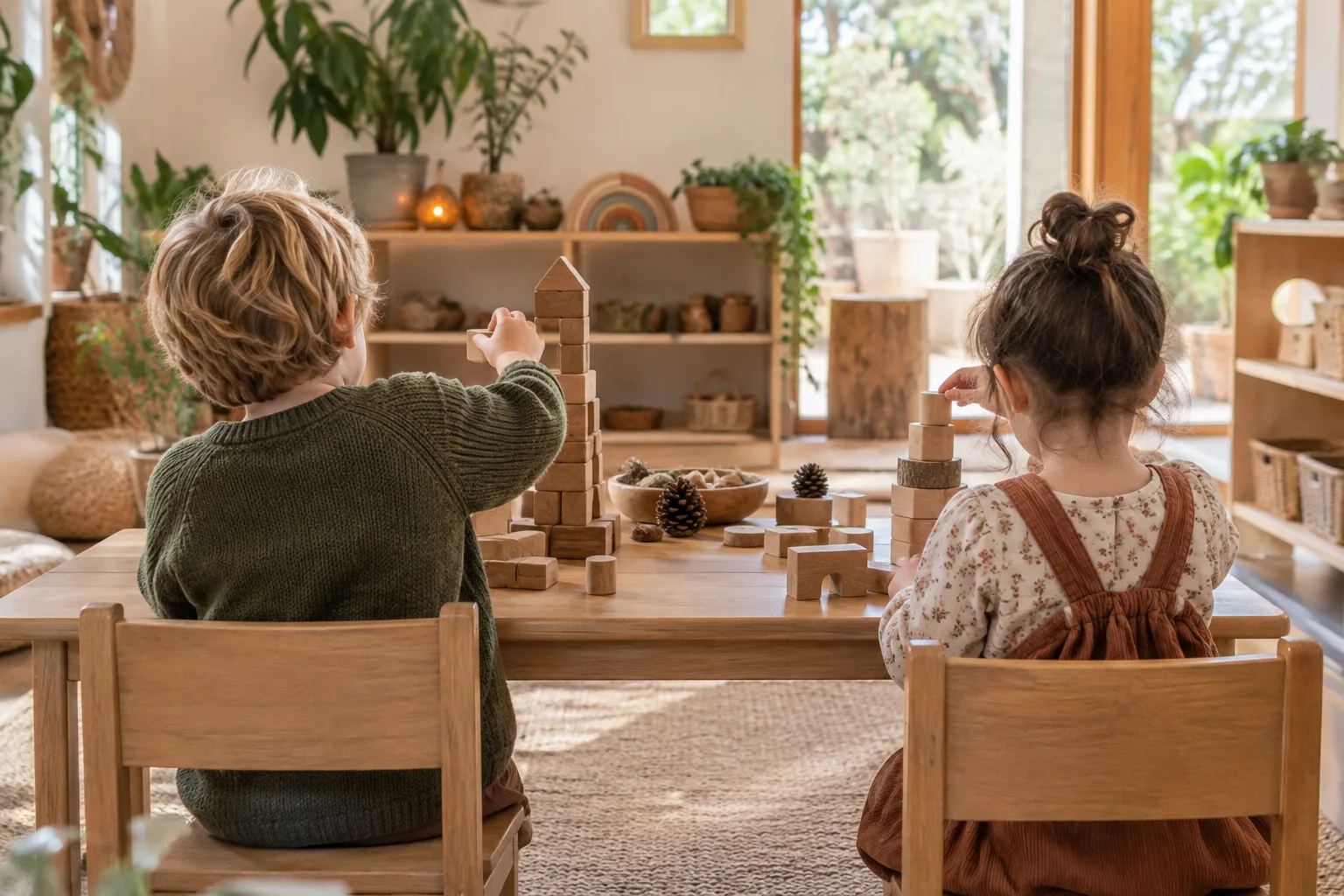
Parallel play means playing near someone without sharing the same game. Two children might each build their own tower, occasionally look at one another or copy an idea.
This can be a comfortable way to enjoy company without negotiating every part of an activity. There is no need to turn it into shared play before either child wants that.
Providing similar materials, such as two scoops and enough sand, can make being alongside each other easier.
Joining shared play
Shared play involves some connection between children's ideas or actions. They might roll a ball back and forth, build a road together or decide who will be the vet in a pretend animal clinic.
This brings extra demands: communicating an idea, responding to someone else's plan and handling disagreements. Even children who enjoy group play may choose independent play afterwards.
Friendship does not need to look like a large group or a constant “best friend”. Small, repeated moments of connection matter too.
Consider the setting, not just the child
Before deciding that your child “doesn't like other children”, consider what makes participation easier or harder.
- Familiarity: Is this a new group, or are there familiar people nearby?
- Energy: Are they tired, hungry or coming out of a busy transition?
- Environment: Is the space noisy, crowded or difficult to enter?
- Interest: Does the activity appeal to them?
- Communication: Would a gesture, demonstration or adult introduction help?
A child may enjoy one-to-one play at home but hang back in a large group. Families and educators may see different things, and both perspectives are useful.
Gentle support when your child wants company
The aim is to make connection more accessible, not to make a child perform sociability.
Ask before stepping in
Try, “Would you like some company, or are you enjoying building by yourself?” For children who are not yet using words, notice their gestures and responses, and offer support without insisting.
Avoid discussing them as “shy” or “a loner” within their hearing. Describe the situation instead: “You're taking some time to look around.”
Offer a small way into the activity
“Can I play?” can be difficult to ask, and a busy group may not know how to respond. A concrete role may help: “They are making a road. Would you like to bring over a truck?”
An adult can check with the other children and help create an opening without forcing anyone to surrender their game.
Keep opportunities manageable
If your child wants time with another child, try a short visit with one familiar peer and an activity they both enjoy. Playdough, drawing or sand play can allow children to begin alongside each other.
Stay available, but leave room for the children to find their own rhythm. A successful visit does not require continuous shared play.
Respond kindly when joining does not work
If another child says no, acknowledge the disappointment without treating it as proof of rejection: “You wanted to join, and that felt upsetting. Let's see what else is happening.”
Repeated exclusion deserves adult attention. Children should not be left to manage a persistent pattern alone.
Questions to discuss with educators
Ask for observations rather than a label. Useful questions include:
- When does my child seem most comfortable and engaged?
- Do they choose solitary play, or try to join and have difficulty?
- Are there children they seek out, watch or enjoy being near?
- What kinds of play make connection easier?
- How do you support invitations to play and respond to exclusion?
- What small approach could we try together, and when should we check in?
Agreeing on one gentle strategy and reviewing it together is usually more useful than setting a target for how many friends a child should have.
When to seek extra guidance
Speak with educators if your child seems persistently lonely, distressed or excluded, or if there is a marked change in how they engage with others.
If concerns continue, affect everyday participation, or involve communication difficulties or loss of previously used skills, speak with your GP or a relevant child health professional. You do not need to wait for a crisis to ask for guidance.
The goal is not to change a contented child into an outgoing one. It is to understand their experience and help them access connection when they want or need it.
Exploring a setting that suits your child
When visiting an early learning centre, ask how educators support both quiet play and social connection. If you are considering Little Woods, you can book a tour to discuss your child's preferences and see the spaces where different kinds of play can happen.